Posts

Showing posts with the label Passivation

The Power of Passivation: Harnessing Citric Acid to Prevent Corrosion in Stainless Steel
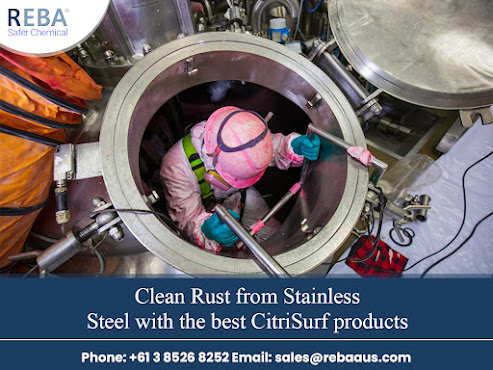
Image
Stainless steel is renowned for its exceptional durability and resistance to corrosion. However, even this robust material can be susceptible to corrosion over time if not properly maintained. That's where the process of passivation comes into play. In this blog, we will explore the significance of passivation for stainless steel and delve into how the utilization of citric acid can effectively prevent corrosion, ensuring the longevity and pristine appearance of stainless steel structures. Understanding Passivation for Stainless Steel Passivation is a crucial step in the manufacturing and maintenance of stainless steel. It involves the formation of a passive layer on the surface of stainless steel, which provides an additional level of protection against corrosion.  This passive layer acts as a shield, preventing the interaction of corrosive elements with the underlying metal, thus extending the lifespan of stainless steel components. The Role of Citric Acid in Corrosion Prevention...

Ensure Greater Durability with Stainless Steel Passivation Process

All you need to know about the Stainless Steel Passivation Process?  Passivation is a finishing process for stainless steel & other metal workpieces. It is a non-electrolytic chemical procedure that creates an outer layer of shield material and removes free iron from the surface through nitric acid or citric acid. Thus, the stainless steel parts are less likely to react with air & therefore, they show better corrosion resistance.  As a consequence of removing free iron & increasing the chromium content in the metal, the  Stainless Steel Passivation Process  achieves a thicker chromium oxide layer, resulting in a significantly improved corrosion resistance.  Why should stainless steel grades get passivated? Stainless steel naturally shows excellent corrosion resistance. However, it is not entirely immune to corrosion, especially rust. Stainless steel owes excellent corrosion resistance to the high chromium content in the alloy. Due to the chemical rea...

Is The Stainless Steel Passivation Process More Beneficial?

What is the meaning of the Stainless Steel Passivation Process? Passivation is the most basic process used for mental finishing to prevent corrosion. In the stainless steel process, either nitric acid or citric acid is used for the passivation process to Remove Rust from Stainless Steel . The chemical treatment results in forming a protective oxide layer with less possibility to chemically react with air & lead to corrosion. Passivated stainless steel prevents rust from the stainless surfaces & pieces of equipment. The chemical procedure involves stainless steel with a mild oxidant with nitric acid or citric acid solutions to remove free iron or other foreign matter. It maximizes the corrosion resistance of stainless steel, helping it to stay rust-free for much longer.  Passivation is the best practice for all grades of stainless steel. It encourages the natural formation of a protective layer on stainless steel , protecting the surface from contamination. Without passiva...