Posts

Showing posts with the label Passivation for Stainless Steel

Effective Passivation for Stainless Steel: Understanding the Power of Citric Acid

Image
 Passivation is an important procedure that preserves the integrity and toughness of stainless steel by adding a shield to its surface. Citric acid has become one of the most popular passivation techniques due to its potent corrosion prevention. In this blog post, we'll look into the relevance of citric acid's crucial role in corrosion prevention as well as the significance of passivation for stainless steel . For stainless steel, passivation entails cleaning the surface to get rid of pollutants and impurities, which helps a passive oxide layer form. This layer serves as a barrier, protecting the metal from corrosive substances and boosting its corrosion resistance. Citric acid offers several advantages when used in the passivation process for stainless steel. By acting as a chelating agent, citric acid efficiently eliminates impurities, iron deposits, and free iron particles from the surface of stainless steel. This results in a clean, corrosion-resistant surface. Stainless st...
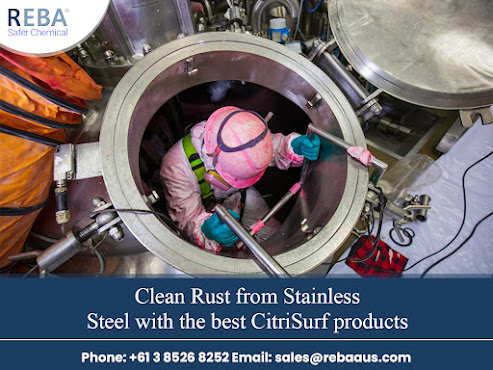
The Power of Passivation: Harnessing Citric Acid to Prevent Corrosion in Stainless Steel

Image
Stainless steel is renowned for its exceptional durability and resistance to corrosion. However, even this robust material can be susceptible to corrosion over time if not properly maintained. That's where the process of passivation comes into play. In this blog, we will explore the significance of passivation for stainless steel and delve into how the utilization of citric acid can effectively prevent corrosion, ensuring the longevity and pristine appearance of stainless steel structures. Understanding Passivation for Stainless Steel Passivation is a crucial step in the manufacturing and maintenance of stainless steel. It involves the formation of a passive layer on the surface of stainless steel, which provides an additional level of protection against corrosion.  This passive layer acts as a shield, preventing the interaction of corrosive elements with the underlying metal, thus extending the lifespan of stainless steel components. The Role of Citric Acid in Corrosion Prevention...

Say Goodbye to Rust: The Ultimate Guide to Rust Removal from Stainless Steel

Image
Stainless steel is one of the most popular materials used in many applications, including home appliances, cutlery, industrial equipment, and more. It is known for its durability, strength, and resistance to corrosion, which is why it is widely used in various industries. However, even stainless steel is not immune to rust. Rust is a common problem that occurs when stainless steel is exposed to moisture, oxygen, and other elements, which can lead to the material's deterioration. In this article, we'll cover everything you need to know about Rust Removal From Stainless Steel, including the benefits of Passivation with Citric Acid. What is Rust and Why Does it Occur on Stainless Steel? Rust is a type of corrosion that occurs when iron or steel is exposed to oxygen and moisture, leading to the formation of iron oxide. Stainless steel contains chromium, which forms a thin layer of oxide on the surface of the steel. This layer protects the steel from rust and corrosion.  However, if...

Ensure Easy Rust Removal from Stainless steel

Image
When compared to tools or mild steel, stainless steel is known for its corrosion resistance. Contrary to popular belief, it is stain “less” rather than stain-proof steel. Unfortunately, even stainless steel can corrode in a variety of environments, ranging from light tea staining to flaky, thick rust. Owners of stainless steel tools, railings, tanks, sinks, grills, appliances, sculptures, boat hardware, and other items that have developed an unsightly layer of rust may become alarmed by this. Rust Removal from stainless steel thus becomes a crucial question. The good news is that, with the right precautions, rust on stainless steel can be simply removed and avoided altogether. Surface iron contamination that was gathered during or after manufacturing and the alloy structure change along the heat-affected zone of welds are two of the most frequent causes of rusting on stainless steel. These corrosion occurrences should be protected with appropriate passivation, but they are occasionall...

Rust Removal from Stainless Steel: How to Make That Happen

Image
Treating or coating a metal with passivation lowers the surface reactivity of the metal to chemicals. In order to avoid rust on stainless steel, passivation entails eliminating any free iron from the metal's surface using an acidic solution. The remaining alloy constituents (mainly chromium, but frequently nickel as well) are left behind as a surface layer over the underlying steel after the surface iron is removed. In the process of Rust Removal from Stainless Steel , these substances react with oxygen in the air to create an oxide layer that shields the rest of the steel from corrosion. The corrosion-resistant surface is susceptible to mechanical, thermal, and chemical degradation. When that occurs, iron is exposed, making the thing more susceptible to rusting. Stainless steel needs to be passivated to add a layer of protection that will shield it from environmental toxins. Metal that has not been passivated is more likely to have small flaws that allow oxygen and water to enter ...